Examples of Products
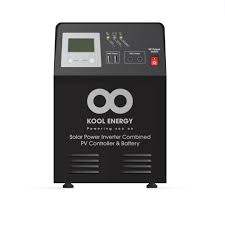
PORTABLE BACKUP BATTERY UNITS
KOOL Energy 1KW – 100AH 12V AGM Battery
- Pure Sine wave inverter
- Portable
- No installation
- Solar ready
- 1 Year warranty
- Overload and short circuit protection
- Can only run 60 watts
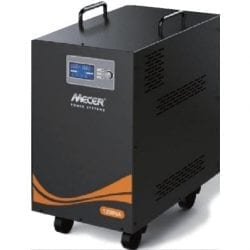
Mecer 1.2KVA / 720 Watt INVERTER
- Simulated sinewave inverter
- Includes 1 x 100AH Deep Cycle Battery
- Includes housing – easy to move around
- 1 Year supplier warranty
- 10A or 20A standard AC charging current
- LCD display
- Overload, short circuit and reverse polarity protection
Mecer 2.4KVA / 1440 Watt INVERTER
- Simulated sinewave inverter
- Includes 2 x 100AH Deep Cycle Battery
- Includes housing – easy to move around
- 1 Year supplier warranty
- 10A or 20A standard AC charging current
- LCD display
- Overload, short circuit and reverse polarity protection
INVERTERS
Mercer 3kVA 3kW Solar Inverter 24V 1500MMPT – Hybrid blending options
- 24V Pure Sine wave inverter MMPT Solar charge Controller 1500 W 60 Amp – charging using AC or solar
- Surge Max Output 6 kw
- 220V Input – 24V DC Battery Input
- Max Solar Input of 145V DC
- 10 Amp AC Battery Charger
- Overload and short circuit protection
- Configuarable AC/Solar Input Priority
- Hybrid – Blend solar first, then Eskom then batteries or solar 1st then battery then Eskom

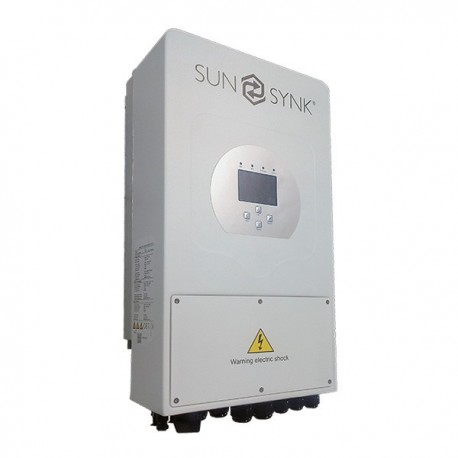
5kW
Sunsynk Hybrid Inverter
- Pure Sine wave inverter
- Maximum efficiency of 97.5% with wide input range
- Self consumption & feed-in to the grid
- Double MPPT design with precise MPPT algorithm
- Programmable multiple operation modes; on-grid / off grid & UPS
- Auto re-start while AC is recovering
- Leakage current protection
- IP65 protection
- Automatically switch from Grid-Tied to Off Grid mode
- Limit function installed to prevent excess power overflow to grid
- Web browsing and mobile app monitoring
- 5 Year Warranty

8kW

5kW
Deye Hybrid Inverter
- 220V single phase, pure sine wave inverter
- Self consumption & feed-in to the grid
- Auto re-start while AC is recovering
- Programmable multiple operation modes; on-grid / off-grid & UPS
- Compatible with a lithium-ion battery and lead-acid battery
- Web browser and mobile App monitoring
- PV lightning protection
- Leakage current protection
- IP65 protection
- Zero export function – prevents the system from feeding in to the grid.
- 5 Year Warranty
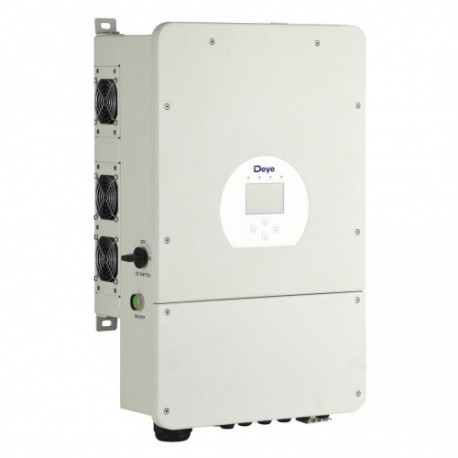
8kW
BATTERIES
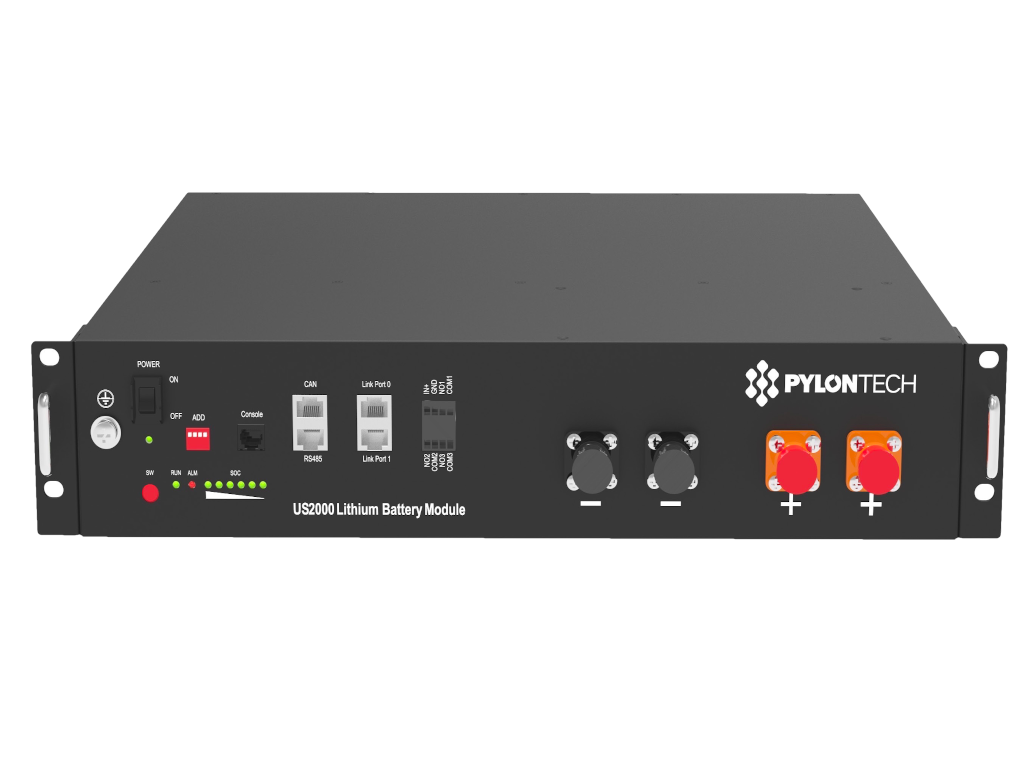
PylonTech Lithium Ion Batteries
- 7 Year warranty with 10 years on registration
- 6000 cycles with 95% DOD
- Parallel connection allowing battery expansion at a later stage
- BMS protected, protecting the cells from abnormal temperatures, surges and irregular voltages
- Modular design gives the end user the power of choice of capacity
- Compatible with most inverters
- Simple buckle fixing minimize the installation time and cost
- Available in 2.4KW, 3.5KW and 4.8KW
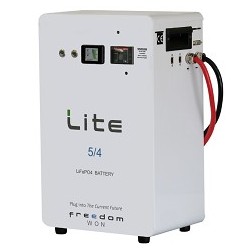
Freedom Won Lite Home Life PO4 Lithium Ion Batteries
- 10 Year warranty
- 4000 cycles at 80% DOD
- Parallel connection allowing battery expansion at a later stage
- Lithium Iron Phosphate Cells (LiFeP04)
- Compatible with most inverters
- Available from 5KWh to 30 KWh batteries
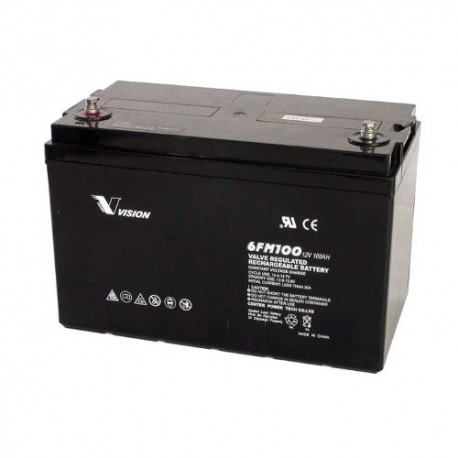
Deep Cycle AGM 100AH / 200ah 12V Batteries (not brand specific)
- Valve regulated lead acid battery
- Fully sealed battery
- Higher operating temps – so overcharge friendly Special one-way valves allow the gases to escape thus avoiding excessive pressure build-up
- The battery is completely sealed and is therefore maintenance free, leak proof and usable in any position
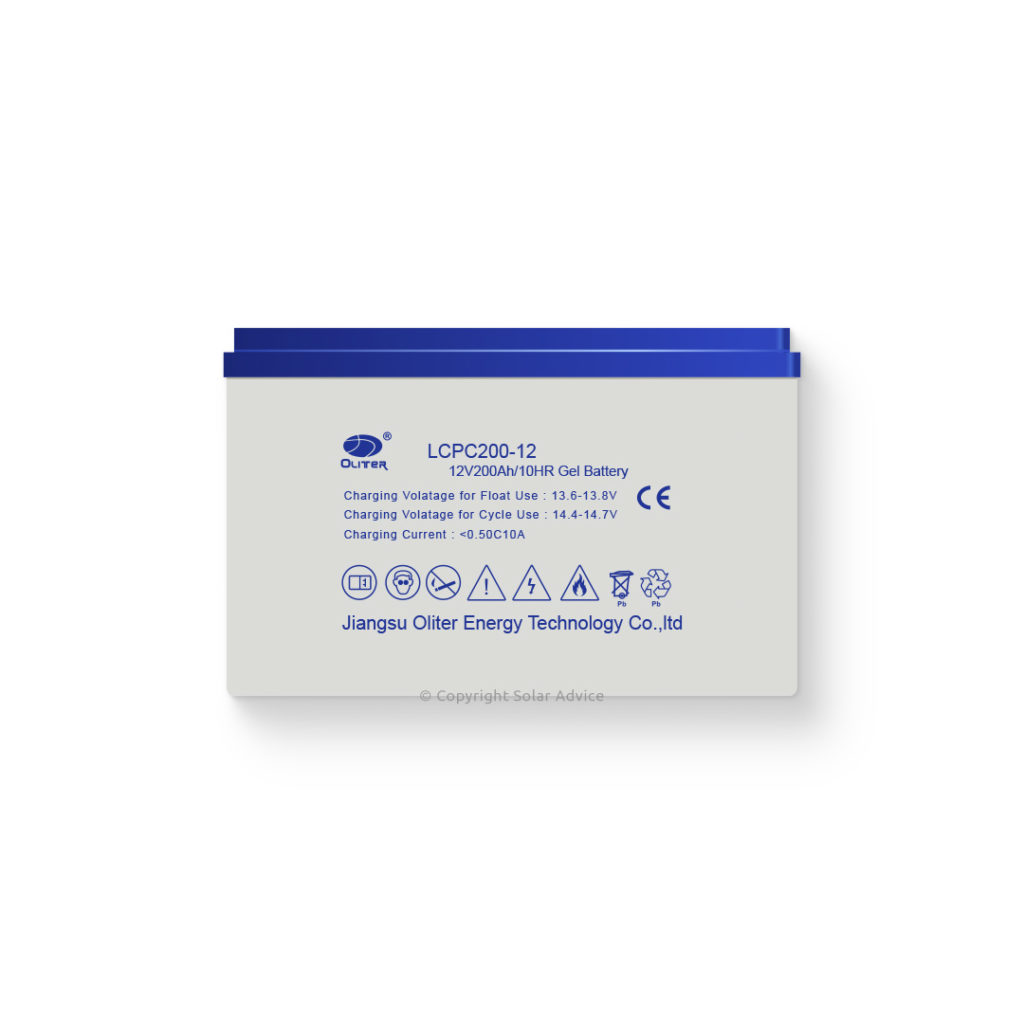
Gel 100AH / 200AH 12V Gel Deep Cycle Batteries (not brand specific)
- Valve regulated lead acid battery
- Fully sealed battery
- Special one-way valves allow the gases to escape thus avoiding excessive pressure build-up
- Electrolyte is immobilized as a gel
- The battery is completely sealed and is therefore maintenance free, leak proof and usable in any position
- Gel batteries have a longer service life and cycle capacity than AGM Batteries
FAQ
What is a hybrid inverter?
A hybrid inverter is an inverter than can simultaneously handle inputs from both solar panels and a battery bank, charging batteries with either solar panels or the electricity grid, as well as generators or other power sources.
The inverter allows you to stay connected to the grid or disconnect completely. The hybrid inverter synchronizes with the electrical grid and supplements your power usage using solar power during the day, a battery bank supplements your usage during the evening hours.
What is a solar grid tied system?
A solar grid tied system is a system that is connected to the electricity grid and works without a battery bank , the system uses solar panels to generate electricity from sunlight and excess power is exported to the utility grid. When the system does not generate sufficient power, power is drawn from the electricity grid. During the evening hours power is drawn from the electrical grid.
What is an off grid solar system ?
An off grid solar system is a system that is not connected to the electrical grid and works with a battery bank.
The system comprises of solar modules (panels), an inverter, a charge controller (if the inverter does not have a built in charge controller), and a battery bank.
The solar modules collect the sun’s energy, the collected energy is sent to the inverter, the energy is converted to AC power and sent to your distribution board, the power is used to power your home. Excess energy that is not used will be stored in the battery bank. The battery bank will power your property at night or on days that are cloudy and overcast.
What is a hybrid solar system ?
This hybrid solar system is a tie between an on grid and an off grid system.
You use your battery backup during standard situations when there is no sunlight, like at night or on rainy days and during emergency times, you can use power from the grid. Once your battery bank is completely charged any excess energy that your system can be sent to the grid
Whats the difference between a lithium ion battery and a deep cycle battery?
Lithium-ion batteries charge 10 times faster than a lead-acid battery, this means the lithium-ion batteries will charge faster during load shedding periods and will be able to sustain multiple power outages with less charging time. A lead-acid battery needs a longer charge time and wont reach full charge in shorter charging times, the lead-acid batteries wont be able to sustain multiple load shedding outages.
A lithium-ion battery reaches almost 100% charge and discharge, with in the worst scenario they, have 80% of efficiency. On the other hand, Deep-cycle lead acid batteries typically have less than 80% charge-discharge efficiency, and can range from 50% to 95%.
Lithium-ion batteries can last an average of 2,000-4,000 cycles. Lead acid batteries have an average cycle of 400-1,500.
Lithium-ion battery voltage is 100% stable while in deep-cycle lead acid batteries, the voltage will constantly drop over its discharge.
Lead-acid batteries are much cheaper then lithium-ion batteries, which are costly.
What size system do i need?
Contact us for accurate system sizing
STEP 1: How to estimate your kWh usage
- Gather the kilowatt-hours (kWh) usage from your electricity bill.
- You need to have 12 full months of usage to be able to look at peaks and dips in usage over a year.
- Determine your average monthly kWh usage by adding up your kWh usage for 12 months and divide by 12 to figure out your average monthly consumption.
- Figure your daily kWh usage. Divide by 30 to determine your daily kWh usage.
STEP 2: Look Up Your Peak Sun Hours
Average peak sun hours vary depending on your location and climate. You need to determine how may peak hours of sunlight you’ll get so you can make the most of the solar power:
Look up your peak sun hours, through a sun hours chart to determine the number of hours per day the sun produces peak sunlight.
STEP 3: How to estimate your system size
Now divide the total amount of watts used per day as you figured out in step 1, by the average amount of sunlight in step 2.
If you use 3000 watts per day in your home and the average sunlight is 8 hours, then you would divide 3000 by 8.
This means you will need at least 375 watts of solar panels to get enough solar energy to power your entire house.
Address
Rue Montpellier Road
Somerset West, Western Cape
Phone
0815391649
info@paladinservices.co.za